
Today’s Featured Author: Ana Hebra Flaster
I met Ana at the Printer’s Row Lit Fest in downtown Chicago, and I was so interested in the story behind her book Property of the Revolution. I knew I wanted to learn more, so I invited her for an interview, and I’m grateful we were able to connect over Zoom for a deeper conversation about her work and inspiration.
Meet Ana
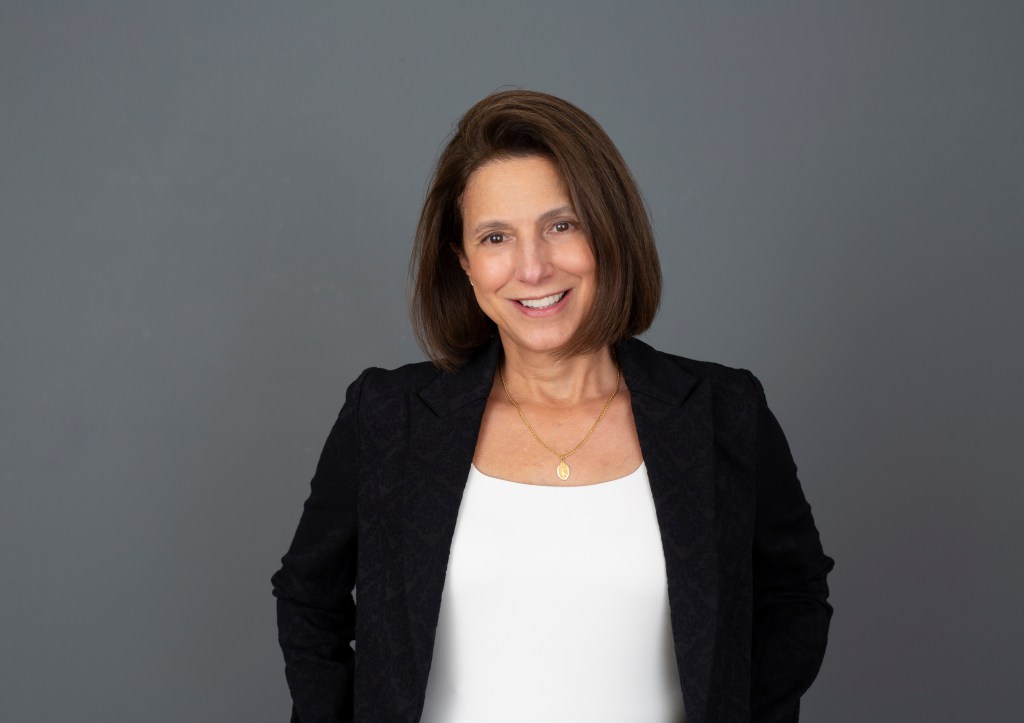
Ana Hebra Flaster has written about Cuba and the Cuban American experience for national print and online media including The Washington Post, The Wall Street Journal, The New York Times, and the Boston Globe, as well as for her popular Substack, @CubaCurious.
Her commentaries and storytelling have also aired on NPR’s “All Things Considered” and PBS’s “Stories from the Stage.” Property of the Revolution, her first book, has won early recognition in several international writing competitions, including being shortlisted in the 2023 Restless Book’s New Immigrant Writing Prize and the 2022 Cintas Creative Writing Fellowship.
She loves watching birds, walking in the woods, and making arroz con pollo for her 27-member Cuban American clan. After almost forty years in the Boston area, she recently moved back to southern New Hampshire with her husband, Andy, and their Havanese pups, Luna and Beny Moré.
Q&A
What inspired you to start writing in general?
I think that when you are a writer, you can’t not write, you’re just sort of drawn to it. I do remember way back when in fourth grade, I think it was the first time that I wrote something for an assignment in school that the teacher was excited about and made a big deal about.
And that’s when I think I first realized that writing was a cool way of expressing yourself and that I got recognition for it. And then it happened again a few more times in school, but I never was a journalist, like I didn’t keep journals.
As far as what inspired me to write, I think the other thing about writers is writers notice things. They noticed maybe the way the light is hitting on something or the way that somebody gestures when they speak. I think us writers want to put that into words. How do you describe that? How would you describe that kind of shimmer on the water? What word would you use to sound like a sneaker scraping, what would that be, like a snap or a squeak?
Writers notice things like that and they need to go somewhere, you can’t not write them down on paper. You need to put that stuff somewhere.
I like that a lot. So is that what inspires you to continue writing, just that process, too?
I think so. It’s just the way my brain works. It’s just words, loving words, loving describing things.
But then there’s the mission of the writing, too, for me, because I care so much about seeing a truly free Cuba and telling the story about what’s happening in Cuba right now that most American readers either don’t really care about, they don’t understand why they should care, or they think they understand it, but it’s often not the way that they perceive it. We’re told about Cuba generally in a very simple, often pro-revolution way and there tends to be a romantic view of the revolution that people believe in, and that view is very stubborn to shake off, they don’t want to shake it.
And the reality is that the Cuban people want political change. They’ve been asking for it, demanding it. They’re going through yet another crisis, and so those of us on the outside with ties to Cuba, I want to tell that story.
When did you know you wanted to publish a book?
So when I was very young, right after we got here from Cuba, the household was in turmoil, you know, not just financially. We had nothing because we had left with a suitcase, literally one suitcase for the family with one change of clothes. Nothing of value of any kind could be taken.
Everything was taken over by the revolution when you left. But I remember the adults being sad, but acting happy, all except my grandmother, who couldn’t hide her grief because she didn’t really want to come. She came to take care of us while the adults worked.
But one day I was drawing a map of the barrio for her of our home, because I remembered where things went and who lived where, and my mother came in. And first of all, it always made my grandmother happy when people talked about home. And when I drew the map of the neighborhood, my mother walked in and said, “You know, maybe one day you’ll write a book about this, about what happened to us.”
And that must have stuck in my head because many, many years later, when I started writing the book, it came back to me that she had said that. And I remember being like 6 years old, and she had said that to me, so somewhere that was tucked in the back of my head. But when I began writing as an adult outside of school, it was after my software career, and again, it was Cuba that brought me to the keyboard. It was 1994, and a little girl had drowned, trying to come here. So I wrote about that, and I got a really great response, and that sort of got me going.
And then I wrote about lots of other things, too, but a lot of it tended to be about Cuba, and then I had commentaries on the radio for NPR, and it just started publishing in different places. One thing led to another from there.
How did you first get published?
Well, the first success I had as far as a writer I guess was local newspapers, I would submit articles about school campaigns or features. I was also on NPR, so it wasn’t really print, it was radio, but that led me to write and to submit essays to the Boston Globe, The New York Times, the Washington Post, the Wall Street Journal and other places, and I got lucky and almost all my pieces were published there.
Then, when it came time for the book, I began with an agent, with two agents at one firm actually. They thought they were going to sell it to a big publishing house. It didn’t. Even they were confused because they said they got some of the longest letters they’d ever received from editors, but then at the end they would pass.
So a letter full of compliments, but then they would pass them. Memoirs are really hard to sell anyway, especially from somebody who’s not famous. Plus it’s also a debut.
I ended up going with a hybrid publisher, a woman-owned, woman-run press called She Writes Press, and they’re distributed by Simon Schuster, and so I knew that I would have the distribution, and it’s a full editorial staff and cover designers and all that, so that’s how the book got published.
I’ve heard of She Writes. So, it all started from doing NPR and then it built up bigger from there?
Bigger and bigger over many years. And I I did want to say that with She Writes, you have to be picked. You submit your manuscript and they choose who they’re going to work with. And sometimes you have to rewrite your book or restructure it. I didn’t have to do any of that for them. They were happy with it.
I had already, with my agents, trimmed the book down a lot from 95,000 words to 80,000 words. And I had spent a lot of time on structure, probably more time on structure than on writing the book.
As far as the publishing process, I don’t come out of an MFA program. I’m in New England and New Hampshire. Now, there are very few Cubans here in general, let alone Cuban authors or the Cuban creative network. So, I really did everything. Probably haphazardly, incorrectly, and in an unorthodox way, but somehow it all sort of worked out.
That’s amazing. I mean, that’s the best kind of way for it to work out.
Yeah, it is. Because it’s very daunting as a writer. When you start looking at how the traditional path into all of this is, it’s a little ecosystem. And it feeds off of itself rather, so to be coming at it from the outside is scary, it’s confusing.
I’m sure that people within the ecosystem who come through the MFA programs who know everybody in the New York publishing circles, they make mistakes, too, but I think it’s especially challenging when you’re working completely from the outside.
What is your writing routine?
I happen to be able to stay up really late and stay focused for a long time, which is good and bad. So that means that I can get away sometimes with procrastinating, because I just bulldoze my way through it on the other side, but then I am in bed for two days because it takes a lot out of me. I used to be able to do that when I was younger and not pay for it. The next day, now at my age, I’m paying for it. The next day and the next day and the next day, so it’s a bad cycle right now, and I have to try to break myself of that.
One of the ways is to write shorter newsletter posts, but what happens is that I sit down, I collect the news from the week, and then I want to tell it all. I have a hard time choosing, and then when I do choose, I write for too long. I end up with three stories, and they’re way too long.
I’m working that out, but it’s been about a year and a half of sending the newsletter every single week. It’s a great exercise to make a readable, hopefully interesting, newsy essay, every single week with 2000 words, sometimes 3000 words, and quickly.
But when I was writing the book, I’m not an early morning person by any stretch, but I would wake up and try to be at the keyboard by 9:00 or 9:30, and then I would write 6 hours at least, eat, and then come back and write again after dinner.
Once I had the structure laid out and I knew exactly what I was going to do in every single chapter, which chapters were going to be super dramatic and which ones were not, it was easier. I had an idea of where I was going every day. I also tried to end every single day on an exciting thing, something I was excited to write about the next day.
To motivate you?
Yes, so that I wouldn’t be terrified. Because it’s terrifying, you know, especially when you’re writing something that’s book length, it’s terrifying and you think, I cannot do this. There’s no way I’m going to be able to pull this off.
I had had this goal to do I had been writing and publishing things about Cuba and the Cuban American experience, but I knew I had this book in me, and people kept asking me, you should write a book, do you have anything going? And I would say, yes, I do. Because I did, I had files and files and scraps of paper everywhere.
And I would say to my husband, “Do you think I’m ever going to write this?” And he would say, “Yeah, you’re gonna write it.” Then one day I asked him and he said, “I don’t know.”
That scared me, and I thought if he doesn’t know, then I’m in a bad spot. I gotta get going on this, and that’s one of the things that happened to motivate me.
So you’re more of like a planner then, at least at first?
Well, when I do my newsletter CubaCurious, I don’t always plan too much. I have a general idea of what I’m going to write about for two stories. Sometimes it’s just one story. I try to do three short news items though.
With the book, it was so daunting to me. I needed a map, and so I did map things out, I did think about structure. I took a workshop with a woman who helps writers with story structure. Then, I hired her to help me, and she just kind of guided me through the process, like where the action will be. Just that super high level thinking about the book.
A lot of people don’t write like that. I have a lot of author friends; they just sit down and they crank out a book. I don’t know how they do it. But because my book was a memoir, because it’s fact-based and because it’s as close to accurate memories as I can possibly be, I needed a map.
Also because I needed to tell two storylines, my storyline as the child refugee, and then my parents as the elders, and it was going to be going back and forth in time, and everything has to be connected, so somehow I had to plan it out. I couldn’t see how I would just write my way into it.
Have you dealt with writer’s block and how do you handle it?
It’s not really writer’s block for me. It’s just fear of getting started. Once I begin, my writing might have the opposite problem, which is overwriting and writing too long.
Well, that’s probably good because it’s harder to add more later. It’s easier maybe to cut out, or that’s what I’ve heard at least.
That’s what I’ve heard too, but I think sometimes that I even write backwards. I will edit as I write and that’s why writing too long is not good for me. I’ve got to try to write shorter.
Because what happens is, I care so much about how this paragraph is going to lead into this paragraph and how that sentence needs to tie to this one. Then it’s way too long and I have to cut it back. This just happened with a piece that I wrote. It was just too long, so now all of these beautiful little woven sentences had to be trimmed. All that time that I spent on that was wasted.
What’s the best writing advice you’ve ever received?
To tell the truth, to write the truth. To not criticize when you’re writing, not criticize yourself.
It’s very hard because there’s always that voice in your head that’s saying “Well, that’s a stupid word” or “That sentence makes no sense” or “That’s cliché” and on and on. I’m hearing that all the time, so try to silence that and just let whatever comes out, come out, and then worry about fixing it later.
So, as you can tell from what I just said before this, I’m not listening to that advice. And I have to keep reminding myself of it.
Do you have any advice for aspiring authors?
Start early. Take workshops. Even if you are in another career. Because let’s face it, paying your bills or school debt, etc. in this career, it is extremely hard.
Read a lot read and read what you know is really good writing. Don’t squander your time or energy.
And also, another thing would be to find another creative activity that nurtures your writing. Maybe it’s drawing, maybe it’s painting, maybe it’s needlepoint. I don’t know, but find something where you’re creating something.
I think when you’re a creative writer, when you’re writing fiction or narrative nonfiction, or even journalistic pieces, a creative approach is really important. Something a little unusual, something maybe with some emotion in it. It all comes from this urge to create, but when you’re so focused on creating through the written word, it can stagnate you and so go create in another medium.
Which books or authors have most influenced your writing?
I would say Carlos Eire, who wrote the national book award-winning memoir in 2003 called Waiting for Snow in Havana. It was his memoir of coming from Cuba after the revolution as part of the Pedro Pan flights, which parents were trying to get their children out of Cuba before there were rumors that they would be indoctrinated and sent to special camp.
He’s actually a professor of history at Yale, and he’s written a second memoir, which is beautiful. And even an academic book that I’ve read, I just love his writing.
I also loved the book by Abraham Verghese, Cutting for Stone. I love Mary Karr’s memoirs, too. But also, I’m usually in love with whatever I’m reading and whoever I’m reading.
What book(s) are you currently reading?
Well, I just read The Correspondent by Virginia Evans, and it’s a lovely book. And for anyone who loves books, I recommend it. The main character writes to authors whose books she has loved, so you get to hear about books and why she loved them.
I’m actually reading a number of books for other authors who’ve asked me to review their book. I also just interviewed someone at a bookstore the other day, who wrote an academic book about migrant children and the role of education in the parent’s decision to migrate to the United States and the impact of the experience on kids and in school classrooms.
It’s called Now We are Here, written by Gabrielle Oliveira, she’s a Brazilian writer and researcher at Harvard. It just came out. It’s academic, it’s research, so it’s not like there’s a plot. It’s information, but it’s really important, and it has moving first-person accounts.
What’s something readers might be surprised to learn about you?
That I can play in the dirt for a long time. I love digging, replanting things, designing the garden. This is the my other creative activity, I love designing, like, what if I put a rock over here? And I want to put moss over in this area, and so I’m never done.
I will say to Andy, especially if I hit a milestone in my writing when I was writing the book, I’d say, if I can get to XYZ, I’m gonna go out and play in the yard, and then I would get to XYZ, and I’d say I’m going out to play in the yard, and then that’s how I’d reward myself, going out and playing in the garden.
What are you currently writing? Anything coming out soon?
I have another book about, I’m about 30,000 words into it. I think it’s going to be a young adult historical novel about two Cuban cousins, one in Cuba and one Cuban American in the United States. And they end up connecting and trying to help each other during the Cuban uprising of July 2021.
Tens of thousands of Cubans rose up across the country and marched and demanded change and liberty. And so she’s going to get in trouble in Cuba and the cousin in the United States tries to help her using social media. This is what actually happened to people.
The parents were told not to say anything about the arrests on social media, and many did not because the authorities said, if you go on social media, it’ll be worse for your child, or your husband or whoever. But those who did use social media tended to come out with better results, because the regime didn’t want the publicity. So it’s the double edge sword, sometimes the prisoner paid for it in the end, but many of the cases that went public, it turned out to be better.
And these two characters are both 17. When you’re 17, you think you could do anything, and that’s what gets them in trouble, but it’s also makes them amazing.
Connect with Ana
Follow along on Ana’s writing journey at her website anacubana.com or subscribe to her newsletter CubaCurious through Substack, delivering Cuban news to your email every Friday.
Wrapping Up
Speaking with Ana Hebra Flaster offered such a rich look into the heart behind Property of the Revolution and the creative drive that has shaped her writing life. Her passion for truth-telling, her deep commitment to sharing the realities of Cuba, and her thoughtful approach to craft all shine through in every answer. Whether she’s talking about structure, inspiration, or the emotional weight of memoir writing, Ana brings both clarity and vulnerability to the page.
Her journey—rooted in childhood memories, family history, and years of persistence in an often-daunting publishing landscape—serves as a reminder of why stories like hers matter. I’m grateful for the chance to learn more about her work, her process, and what’s next. If you’re drawn to memoirs, narratives shaped by history, or voices that challenge the familiar narrative, Ana’s writing is one you won’t want to miss.
You can find Ana’s book ‘Property of the Revolution: From a Cuban Barrio to a New Hampshire Mill Town’ through Bookshop.org. Every purchase supports independent bookstores and helps sustain Notes from the Shelf. (Affiliate link; I may earn a small commission.)
Check out More Conversations with Authors
Love what you’re reading here? Support the blog and fuel my next cozy reading session by buying me a coffee.
 Notes from the Shelf
Leave a comment